Four new crew members reached the International Space Station (ISS) on Oct. 1, 2026, after a trip of 7 hours and 55 minutes that NASA said was the fastest launch-to-docking of a U.S. spacecraft in the station’s history. By Oct. 6 the Crew-13 team had begun a set of health studies while the departing Crew-12 crew prepared to return to Earth.
The crew, NASA astronauts Jessica Watkins and Luke Delaney, Canadian Space Agency (CSA) astronaut Joshua Kutryk and Roscosmos cosmonaut Sergey Teteryatnikov, lifted off on a SpaceX Falcon 9 rocket at 11:10 a.m. EDT on Thursday, Oct. 1, from Space Launch Complex 40 at Cape Canaveral Space Force Station in Florida, according to NASA’s launch coverage. At liftoff the station was flying about 263 miles above Earth at roughly 17,500 mph (28,200 km/h), northwest of Havana, Cuba.
The Dragon spacecraft docked to the forward port of the station’s Harmony module at 7:05 p.m. EDT, NASA reported. The crew then began standard leak checks and pressurization ahead of opening the hatch.
Who is flying
Watkins is commanding the mission, according to her NASA biography, and it is her second mission to the station. She first flew as a mission specialist on NASA’s SpaceX Crew-4 mission from April 27 to Oct. 14, 2022, logging 170 days in space across Expeditions 67 and 68. She holds a doctorate in geology from the University of California, Los Angeles.
Kutryk is the first CSA astronaut to be part of NASA’s Commercial Crew Program, according to his CSA biography, which says he will live and work on the station for approximately six months and that the crew arrived aboard a Dragon called “Grace.” A colonel in the Royal Canadian Air Force and a former test pilot, Kutryk was one of two recruits selected by the CSA in July 2017. He had earlier been assigned to the Starliner-1 mission, which the agency says was later changed to an uncrewed cargo flight.
First experiments
An Oct. 6 NASA station update described the new arrivals’ first research, much of it focused on their own bodies. Watkins collected, processed and analyzed her blood samples for a study of the risk of blood clots caused by spaceflight. Delaney logged his sleep patterns, collected a saliva sample and set up a smart watch to gather health data for an investigation called RelaxPro.
Kutryk had his veins scanned with the Ultrasound 3 device, operated by European Space Agency (ESA) astronaut Sophie Adenot of Crew-12. Teteryatnikov wore an acoustic sensor around his neck and recorded his breathing rate for a respiratory study that NASA did not name.
Crew members who began their stay on July 14 and will remain until spring were also at work. NASA astronaut Anil Menon wore a vest and headband fitted with sensors that measured his heart and breathing rates while he pedaled the exercise cycle in the Destiny module. Roscosmos cosmonauts Pyotr Dubrov and Anna Kikina set up hardware to test a body-worn control device for simulating robot manipulation, part of an investigation called Teledroid.
Crew-12 prepares to leave
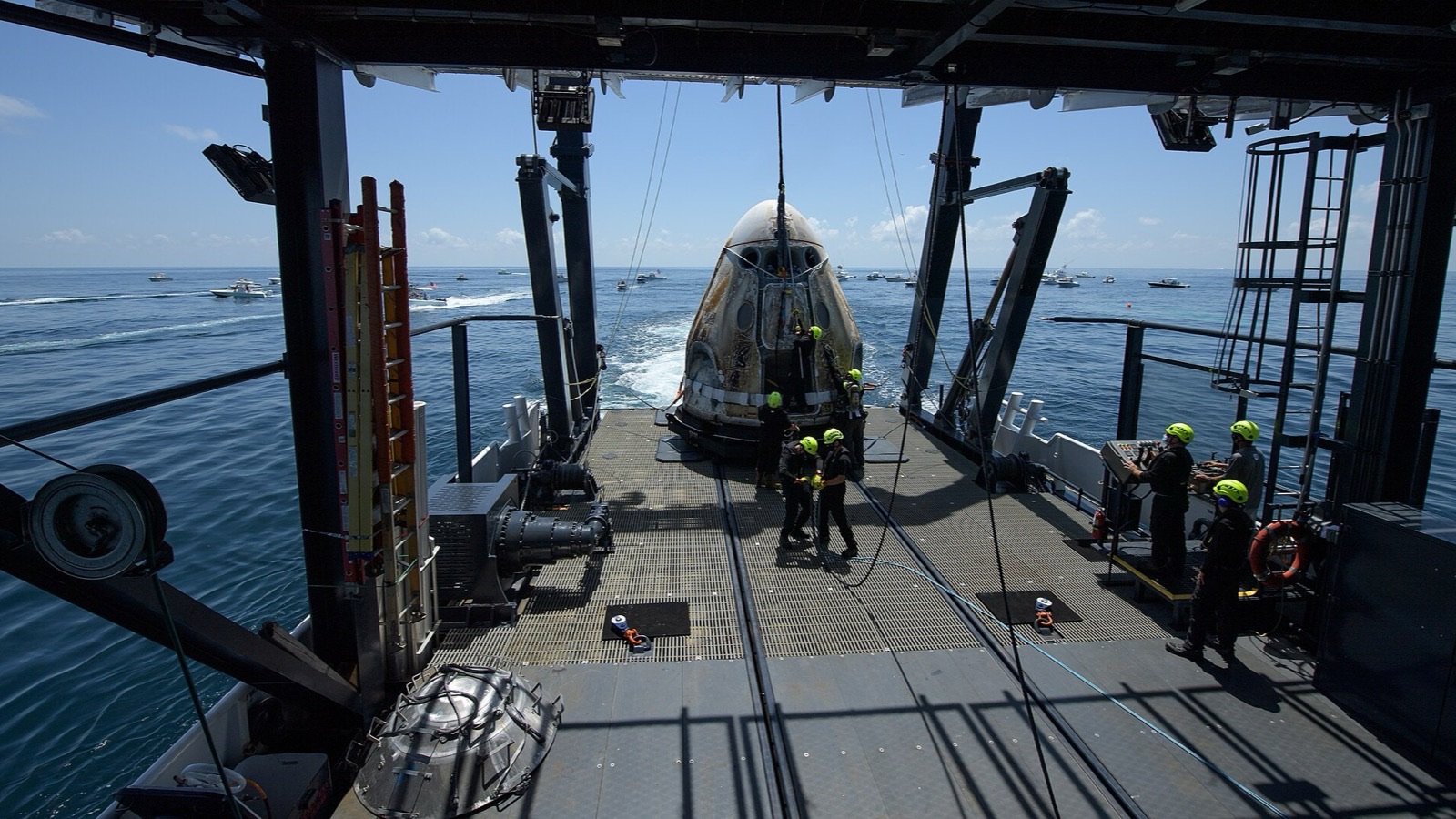
With both crews aboard, 11 people are living on the station. NASA said Crew-12 commander Jessica Meir and pilot Jack Hathaway will fly their Dragon away from the space-facing port of the Harmony module at 8:05 a.m. EDT on Wednesday, Oct. 7, with Adenot and Roscosmos cosmonaut Andrey Fedyaev aboard. Splashdown under parachutes in the Pacific Ocean is planned for Thursday, Oct. 8, and NASA put the crew’s time in space at 237 days. Seven people will remain on the station after the departure.
Why it matters
The first week of Crew-13 shows how much of the station’s research uses the astronauts themselves as subjects. Blood clot risk, sleep and breathing are all measured on the crew, and the handover period lets outgoing members help: an ESA astronaut from Crew-12 ran the ultrasound scan on a newly arrived Canadian crewmate shortly before her own departure.
The flight also marks a step for Canada in U.S. commercial crew flights, with Kutryk the first CSA astronaut in NASA’s Commercial Crew Program, and Crew-13 carried members of three agencies, NASA, the CSA and Roscosmos, on a single SpaceX vehicle. The shorter launch-to-docking time, which NASA described as a record for a U.S. spacecraft at the station, means less time confined to the capsule before the crew can move into the station.
What to watch
Crew-12’s undocking is scheduled for the morning of Oct. 7, with splashdown the following day. Crew-13 then settles into a stay that the CSA puts at about six months, with the station’s population returning to seven.
Corrections and tips: email the editor using the address on the Contact page.