Bismuth sulfide absorbs light strongly but holds on to charges, study finds
A Nature study led by Oxford physicists finds bismuth sulfide cuts its rate of charge loss by about 75% versus comparably absorbing materials, easing a solar trade-off.
From particle physics to fusion, batteries, grids and nuclear power.
A Nature study led by Oxford physicists finds bismuth sulfide cuts its rate of charge loss by about 75% versus comparably absorbing materials, easing a solar trade-off.
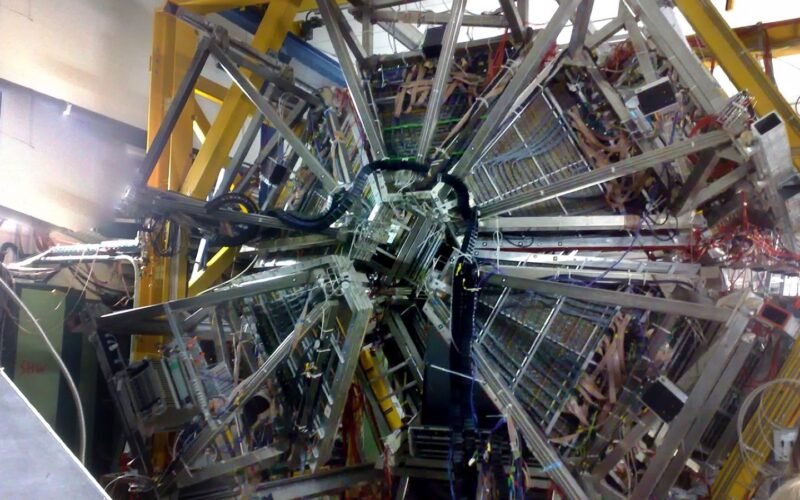
The STAR experiment reports a 20% suppression of energetic particles in oxygen-oxygen collisions at 200 GeV, strong evidence of jet quenching in a small collision system.
Germany's Research Instruments has finished the first series-production inner vertical target for ITER's divertor, a tungsten-armored part built to take heat loads of up to 20 MW/m².
The NRC renewed Westinghouse's AP1000 design certification through 2066 and updated it with changes made while building and running Vogtle Units 3 and 4.
An International Energy Agency review finds Southeast Asia more reliant on imported oil and gas, and urges diversified supply, domestic resources and faster electrification.